RKC KB

This website uses technical and functional cookies so everything works smoothly. If you do not agree to the use of cookies, please do not use this website.

privacy policy

Select your region

Please choose your region to continue.

Kettlebell Styles & Training Types Compared

The most important question: What do you plan to do with the kettlebell?

There are many kettlebells. But not every ball fits your training goal. There are different kettlebell styles that fundamentally differ – in technique, intensity, methodology, and equipment.

Here you will find an overview of the most important training styles:


🏋️‍♂️ Fitness Training with Kettlebells

In short: Trend training with light balls – often without real technique.

What is sold as "kettlebell training" in gyms often has little to do with functional training. It usually involves group or personal training with tiny balls and little preparation. The technique suffers, biomechanical errors accumulate, and injuries follow.

Typical features:

  • Very light weights (<12 kg)
  • No technique training, no progression
  • Incorrect loading, high injury risk
  • Usually performed with "fitness kettlebells"

Conclusion: Not suitable for real kettlebell training. No substitute for well-founded training with an instructor.


🎪 Kettlebell Juggling

A spectacular addition – but not for beginners.

Juggling with kettlebells is technically demanding, creative, and fun. But: Only makes sense if you have stable foundations and perfect technique. Without sufficient body tension (reactive stability) and technique, it is risky.

Typical features:

  • Often trained with competition kettlebells
  • Requires years of technique training
  • High coordination and stabilization requirements

Conclusion: Only makes sense after several years – not suitable as an entry point.


🥇 Girevoy Sport (GS)

Soft Style – high output, minimal movement efficiency.

GS is the competitive style of kettlebell training. The goal is to achieve as many repetitions as possible within a given time – without putting the kettlebell down. The technique is highly specialized, energy-saving, and extremely endurance-heavy.

Typical features:

  • Competition kettlebells (all weights same size)
  • Thin handle, soft movement execution
  • Extremely high repetition numbers
  • Focus on grip strength endurance and mental resilience

Conclusion: Makes sense for competitive athletes with specialization – not a system for general fitness.


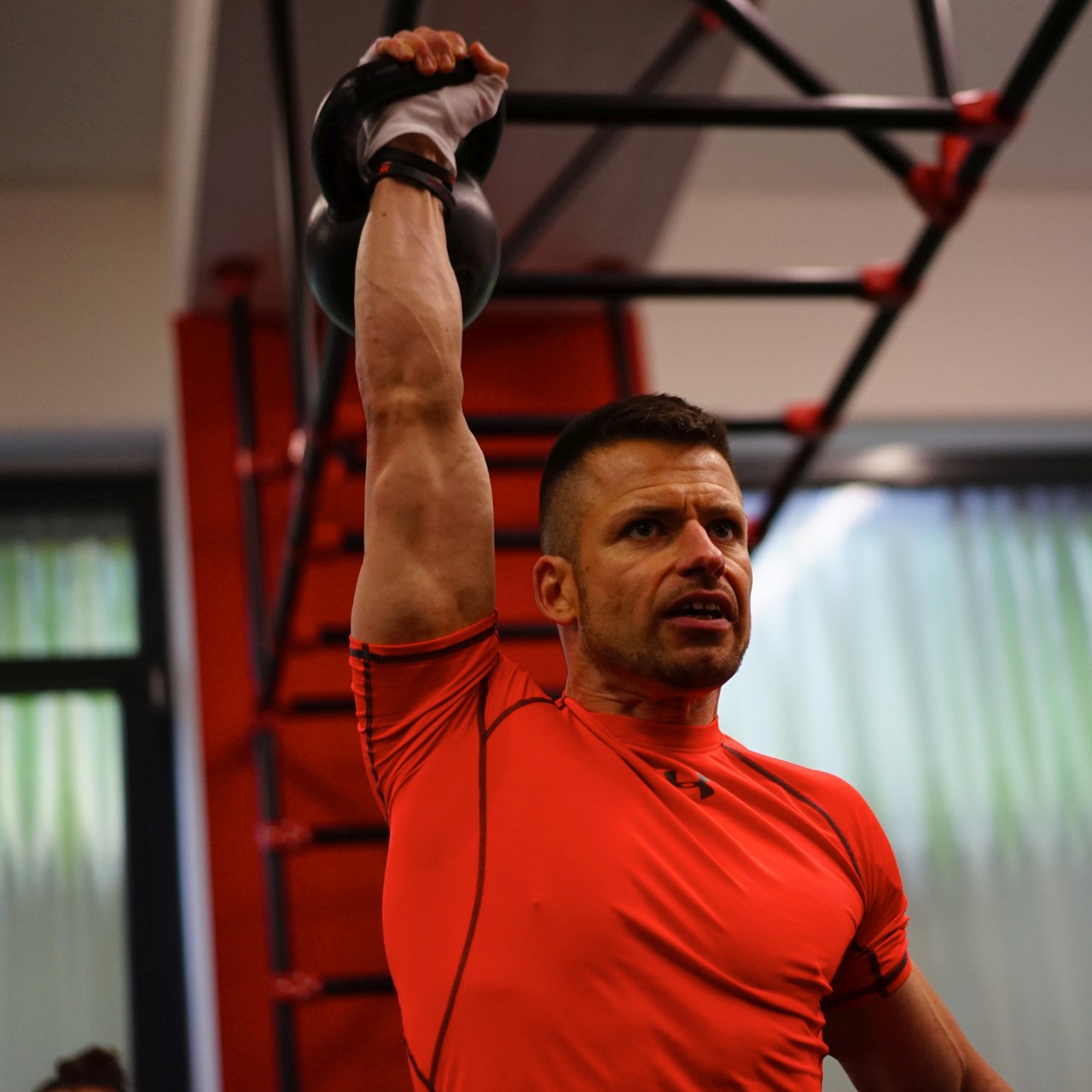
🔥 Hardstyle Kettlebell Training

Maximum performance, explosive strength, and functional fitness.

Hardstyle is the system behind the RKC certification. It is based on military training logic and combines tension, relaxation, power, and precision. The goal: general preparation, performance capability, body control.

Typical features:

  • Trained with Dragondoor kettlebells
  • Focus on quality over quantity
  • Ideal for strength, endurance, athleticism, and body composition
  • High power output per repetition
  • Extremely versatile: from rehab to elite sports

Conclusion: The gold standard in functional kettlebell training. Scientifically based, clearly structured, and universally applicable.


Which style suits you?

Plainly put: Those who want to do real kettlebell training will eventually end up with Hardstyle.

Read more:
→ [Classification of Kettlebell Exercises]
→ [Hardstyle vs. Girevoy Sport – which is better for you?]

Kettlebell Styles Compared

Style Target Group Equipment Typical Recommendation
(Name) (short) (kettlebell type) (style feature) (assessment)
Hardstyle Functional strength, performance Dragondoor Short, explosive sets ✅ Suitable for beginners & pros
Girevoy Sport Competitive sport, endurance Competition Energy-saving technique, many reps ⚠️ Only makes sense for specialization
Fitness Recreational athletes without a focus on technique Fitness KB Light weights, no progression ❌ Not recommended
Juggling Advanced with a technical foundation Competition Free play, high coordination ⚠️ Only makes sense after years