Like most weightlifters, I had some issues with my lifting form. In the Olympic lifts and their variations, the second pull was my nemesis. I just couldn’t get the timing right. I trained with straps, pulled from blocks, tried all kinds of variations—but I still couldn’t get it. The timing of the hip snap is so essential for a powerful acceleration of the barbell. The kettlebell cure was silently standing nearby, but I didn’t understand that until the RKC Workshop.
After the RKC certification, I devoted more time practicing what I learned at the course. Most of my life, I have practiced martial arts and knew that while the basics may be boring, they build the solid foundation of every single aspect of your training—and in life. In my own training, I have spent a lot of time on the basic kettlebell swing.
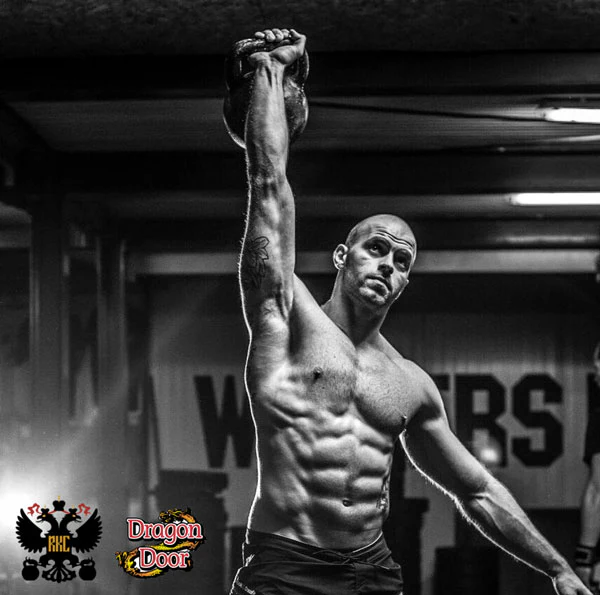
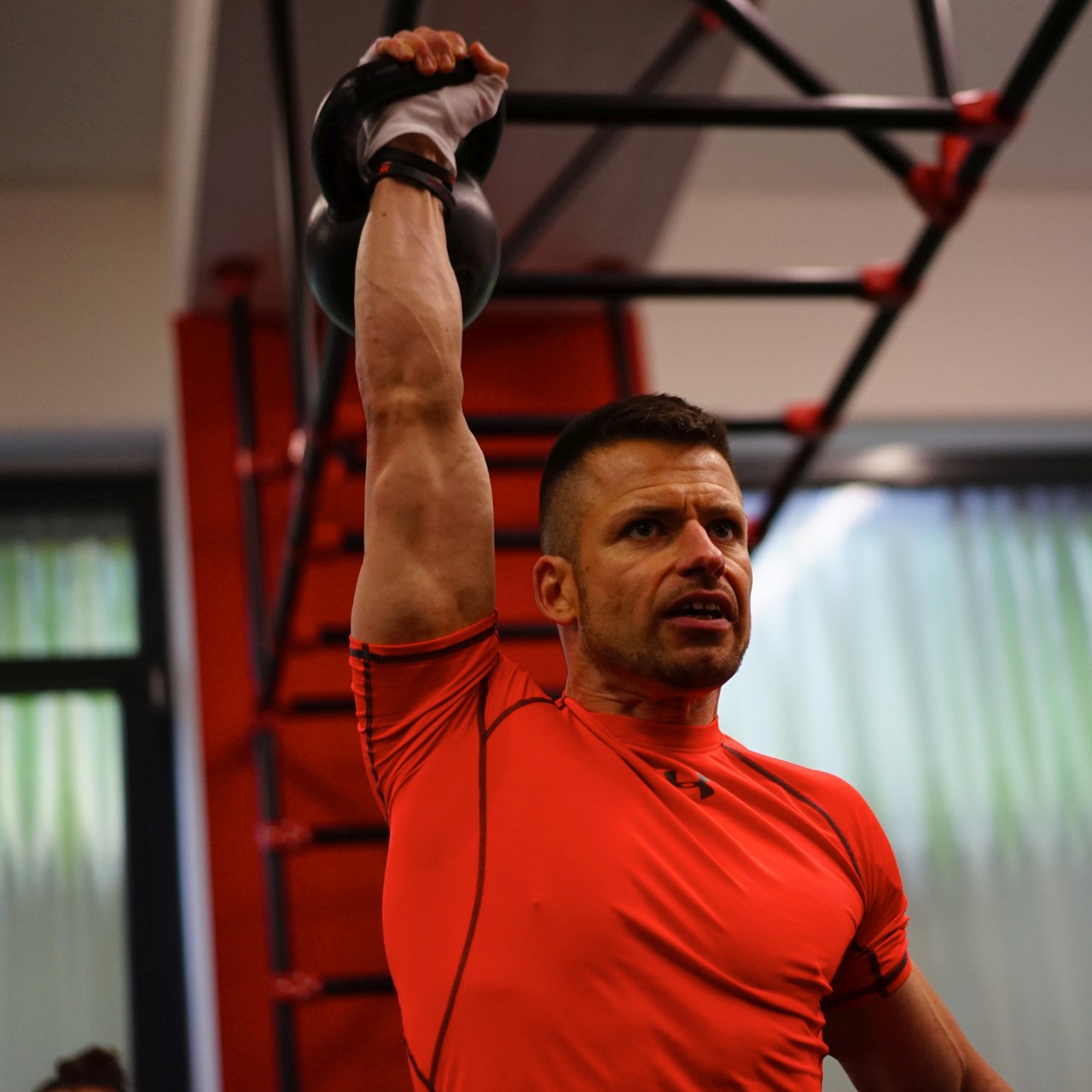
After being taught the proper kettlebell swing mechanics, I bought some heavier kettlebells and started swinging them regularly. I did sets of 10, 30 and 50—for fun and conditioning.
I focused on pulling the kettlebell behind myself, before I accelerating it with my glutes. Locking the quads and bracing the core as a split-second break at the top of the swing taught me more than the past few years of weightlifting alone. I now understood that my movement pattern had been causing the problems in my Olympic lifts. After establishing a solid foundation for the hinge—and its dynamic variations—it can easily transfer to the second pull of many Olympic barbell lifts.