This website uses technical and functional cookies so everything works smoothly. If you do not agree to the use of cookies, please do not use this website.
privacy policyPlease choose your region to continue.
This is the second part of a two-part series about top tips for trainers working with expecting mamas. In part one, we covered the first 3 tips for training pregnant women, and today we take a look at three more important points of advice for coaching women during pregnancy.
Early in my pregnancy, I noticed that my belly was “coning” when I performed exercises like push-ups and planks—even though those are commonly recommended moves for pregnant women. After doing my own research, I realized that this was a sign of DR. When I mentioned this to my doctor, he told me not to worry about it since there was nothing I could do to fix it until after I had the baby. While my research confirmed I could not fix the problem during pregnancy, it also revealed that I could prevent making the problem worse by avoiding certain exercises.
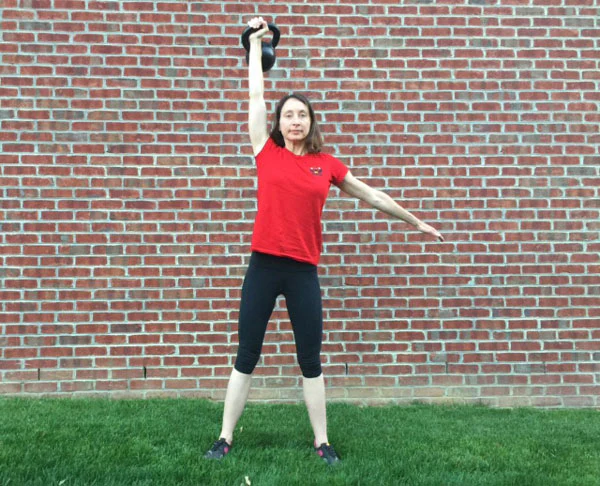
When working with an expecting mom, assess her for DR several times as her pregnancy progresses. Avoid incorporating exercises in your programming that strain or twist the abdominals which can worsen the abdominal separation. Examples of exercises to avoid are: the get-up, windmill, push-ups, and traditional core exercises such as standard planks, sit-ups, crunches, Russian twists, v-ups, leg raises, etc. Additionally, clients should steer clear of exercises that create a risk of falling, such as box jumps. They may also not feel comfortable doing other “jumping” exercises like jumping jacks or jump rope, since these movements can cause increased pressure on the bladder.
Beginning in the second trimester, it is also important to avoid exercises that require your client to lie flat on her back. This precaution can prevent the weight of the uterus from compressing the vena cava—a major blood vessel—potentially disrupting blood flow to the baby and leaving mom dizzy and short of breath. An easy way to work around this issue is to instruct your client to do these prone exercises, such as floor presses, on an incline instead.
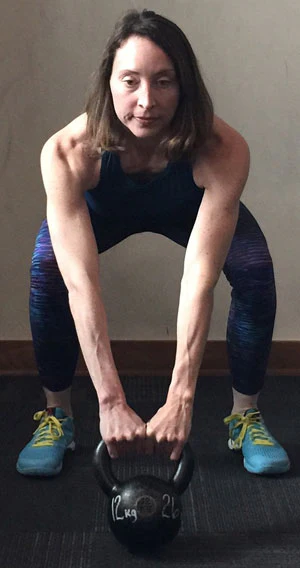
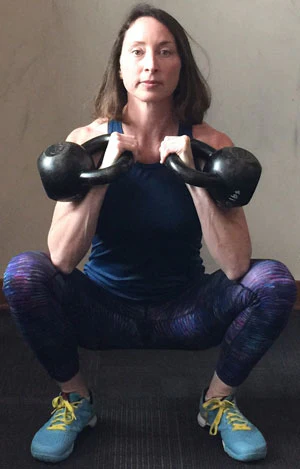
Some of the best exercises to incorporate into a prenatal client’s programming include: goblet squats (which help prepare for labor), seated one-arm military presses, kettlebell deadlifts, suitcase deadlifts or sumo deadlifts, kettlebell swings (as the belly grows, single arm kettlebell swings may be more comfortable), single arm bent-over rows, and alternating reverse lunges. Single-leg deadlifts may also be appropriate earlier in a pregnancy, but it is best to avoid exercises that require great balance as the pregnancy progresses since balance will become compromised as the belly grows.
Pregnancy is simply not a time to try to pursue a weight or endurance PR. While there are lots of photos and videos online of women who are nine months pregnant squatting and deadlifting very heavy weights, I discourage clients from doing these types of feats. Very heavy lifting can put unnecessary pressure on their pelvic floor, which can cause complications both during and after pregnancy. Pregnancy is also not a time to try to beat your previous times in high endurance sweat sessions. I remind clients that when it comes to strength and conditioning, the goal during pregnancy should be “to maintain and not gain”. Focus on skill development and form.
You might have a new client who is expecting but who was not physically active prior to pregnancy. It is still possible for this client to begin a training regimen, as long as she consults with her doctor, and you avoid programming strenuous and complex exercises. Instead, focus on foundational movements such as bodyweight squats, bodyweight stationary lunges, kettlebell deadlifts, seated military presses and bent-over rows.
Walking is also an excellent exercise to add to an expecting mom’s program, whether she is new to exercise or an advanced athlete. Walking is a full-body exercise that is generally safe to do throughout pregnancy. The intensity can be adjusted based on the client’s fitness level. Additionally, walking has been shown to lower the risk of certain complications such as gestational diabetes and pre-eclampsia. Walking can also help to relieve stress, elevate your client’s mood and give her some much-needed “me time.”
I look forward to sharing the knowledge I gained through this experience to help other expecting moms swing through pregnancy and beyond.
Be healthy, happy and strong,
Kathleen Walters
****
Written in collaboration with Master RKC Michael Krivka
This article was originally published on dragondoor.com and is republished here with the kind permission of Dragon Door.
Original URL: https://dragondoor.com/blogs/blog/swinging-through-pregnancy-prenatal-kettlebell-training-part-2